Friday, 13 December 2013

Mohammad Yousuf

Mohammad yousuf biography


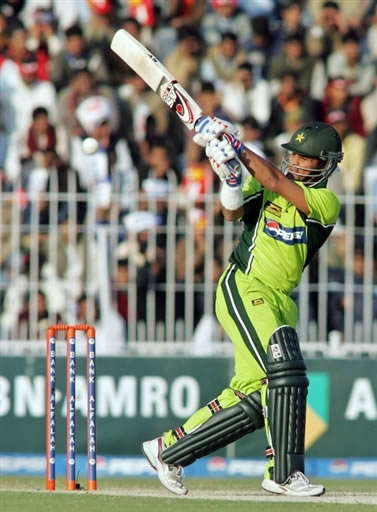
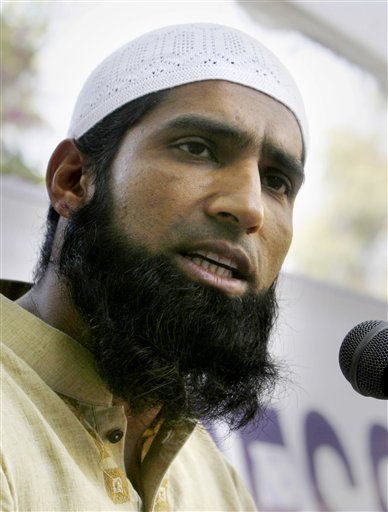
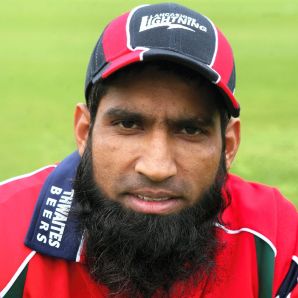
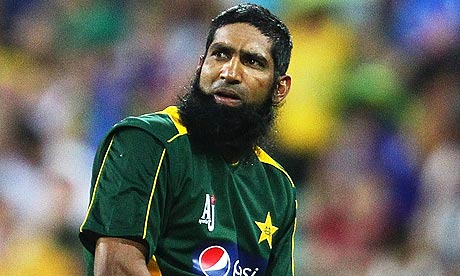
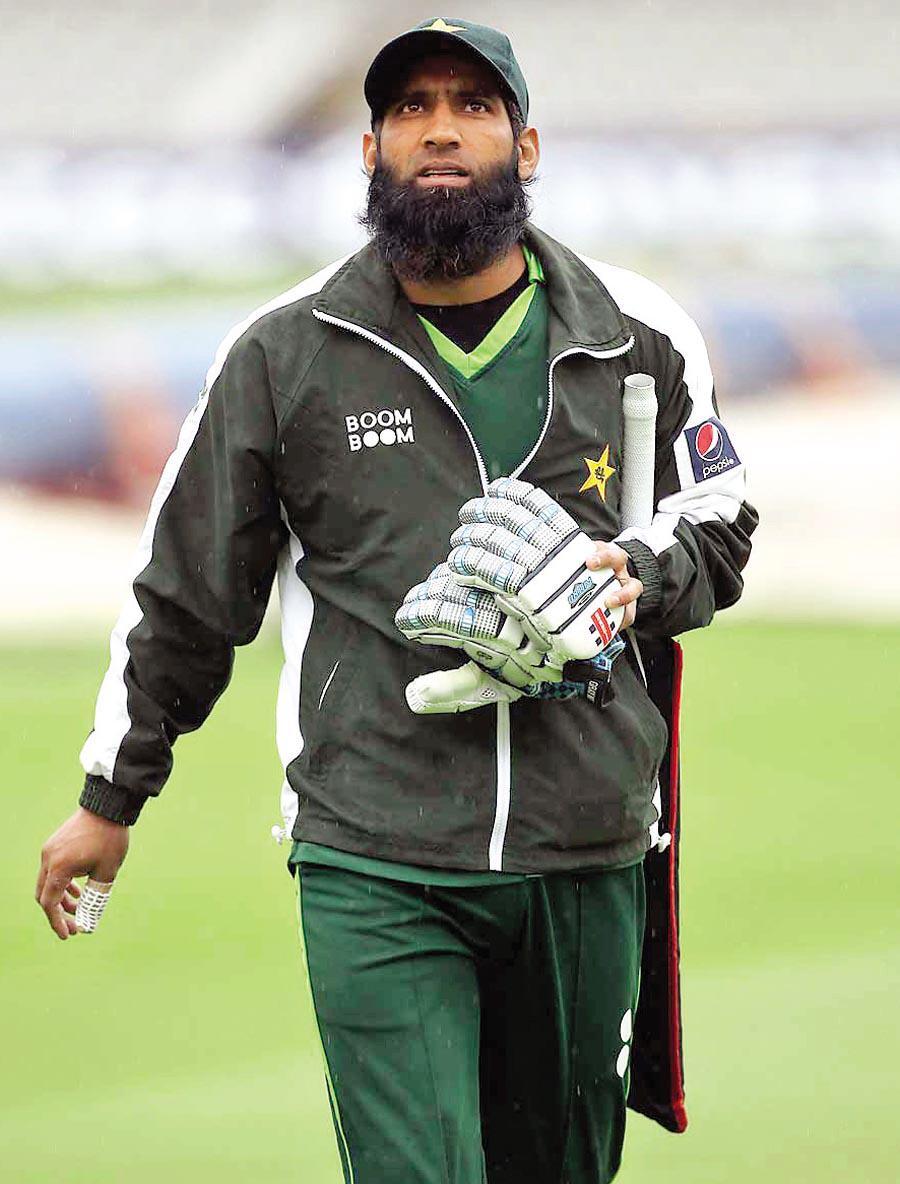
Mohammad Yousuf (formerly Yousuf Youhana, born 27 August 1974, Lahore, Punjab, Pakistan) is a Pakistani cricketer who has been a member of the Pakistani national cricket team since 1998. He is best known for his achievement in 2006 when he broke the great West Indian batsman, Sir Vivian Richards', world record for the most Test runs in a single calendar year. Prior to his conversion to Islam in 2005, Yousuf was one of the few Christians to play in the Pakistan national cricket team. He made his Test debut against South Africa at Durban and ODI debut against Zimbabwe at Harare. He has scored over 9,000 ODI runs at an average of 43.63 (2rd highest batting average among Pakistani batsmen after Zaheer Abbas and 6,770 Test runs at an average of 55.49 (highest batting average amongst all Pakistani batsmen) with 23 Test centuries. He has the record of scoring the most runs without being dismissed in ODIs, 405 against Zimbabwe in Zimbabwe in 2002-03. He has also scored a 23-ball fifty in ODIs, and a 68-ball hundred. In Tests he has scored a 27-ball fifty, which is 3rd fastest by any player. He was top scorer during the successive years of 2002 and 2003 in the world in ODIs. In 2004, he scored a memorable 111 against the Australians in the Boxing Day Test. In December 2005, he scored 223 against England at Lahore, also earning him the man of the match award. Seven months later in July 2006, when Pakistan toured England, he scored 202 and 48 in the first Test, again earning himself the man of the match award. He followed up with 192 in the third Test at Headingley and 128 in the final Test at the Oval. Yousuf was named CNN-IBN�s Cricketer of the Year for 2006, ahead of the likes of Australian captain Ricky Ponting, West Indies Brian Lara, Australian spinner Shane Warne, South Africa�s bowling spearhead Makhaya Ntini and Sri Lanka�s Muttiah Muralitharan. He was selected as a Wisden Cricketer of the Year in the 2007 edition. Yousuf became the fourth recipient of the ICC 'Test Cricketer of the Year' award for 2007, he scored 944 runs at an average of 94.40 including five centuries and two fifties in just 10 innings and that was enough to be awarded the honour ahead of Kevin Pietersen and Ricky Ponting. Yousuf was also named in the 2007 Test team of the Year alongside compatriot Mohammad Asif. A year that started on a promising note, Yousuf carried it forward to break two world records both held earlier by West Indian great Sir Vivian Richards. The 32-year-old smashed an unparalleled 1788 runs in just 11 Test matches with the help of nine centuries � his second record � taking him beyond the Windies great yet again. Yousuf is known for his ability to score runs at exceptional rate through his great technique and composed strokeplay. Although capable of hitting the ball hard, Yousuf is quick between the wickets, although he is prone to being run out. Yousuf is a skillful infielder, with a report prepared in late 2005 showing that since the 1999 Cricket World Cup, he had effected the ninth highest number of run-outs in ODI cricket of any fieldsman. He is also distinguished by his characteristic celebration after hitting one hundred runs for his country, where he prostrates in thankfulness to Allah in the direction of Mecca. He has observed this act (known as the Sajdah) recently since his conversion to Islam.Until his conversion to Islam in 2005, Mohammad Yousuf (formely known as Yousuf Youhana) was one of a handful of Christians to play for Pakistan. After a difficult debut against South Africa in 1997-98, he quickly established himself as a stylish world-class batsman, and a pillar of Pakistan's middle order, alongside Inzamam-ul-Haq. He is no sluggard, but gathers his runs through orthodox, composed strokeplay, unlike some of his colleagues who seldom hint at permanence. He is particularly strong driving through the covers and flicking wristily off his legs and brings with him as decadent and delicious a backlift as any in the game. A tendency to overbalance when playing across his front leg can get him into trouble. He excels at both versions of the game, and in one-day cricket can score 20 or 30 runs before anyone notices. He is quick between the wickets although not necessarily the best judge of a single. There had been questions about his temperament as batsman when the pressure is on, but between 2004 and 2005, he began to silence critics. First came a spellbindingly languid century against the Australians in Melbourne, as captain to boot, where he ripped into Shane Warne like few Pakistani batsmen have before or since. A century in the cauldron of Kolkatta followed but he ended the year with possibly his most important knock: a double century against England at Lahore so easy on the eye, you almost didn't notice it. With Inzamam missing through injury for parts of the innings, Yousuf displayed an unusual responsibility, eschewing the waftiness that has previously blighted him. In 2006, Yousuf truly came of age in a record-breaking year. He began by plundering India and continued in England, not just scoring under pressure, but scoring big. A double ton at Lord's was followed by another big hundred at Headingly and the Oval. He rounded off a fantastic year with four hundreds in three Tests against the West Indies, a feat that took him past Viv Richards's long-standing record of most Test runs in a calendar year and also saw him establish the record for most Test hundreds (9) in a year. With Inzamam nearing a natural end, the credentials of Yousuf as Pakistan's premier batsman are impressive.

 Mohammad Yousuf


 Mohammad Yousuf 


 Mohammad Yousuf  


 Mohammad Yousuf 


 Mohammad Yousuf 


 Mohammad Yousuf 


 Mohammad Yousuf 


 Mohammad Yousuf 


 Mohammad Yousuf 


 Mohammad Yousuf 


 Mohammad Yousuf         

Imran Farhat

imran farhat biography


Full Name: Imran Farhat
Date of Birth: May 20, 1982, Lahore, Punjab
Major Team: Pakistan, Biman Bangladesh, Habib Bank Limited, ICL Pakistan XI, Lahore, Lahore Badshahs, Lahore Eagles, Lahore Lions, Pakistan Reserves
Playing Roll: Batsman
Batting Style: Left
Bowling Style: Legbreak
Nick Name: Romi
International Debut: 2001
Imran Farhat (Urdu: عمران فرحت‎, ) is a Pakistani cricketer who has played over 30 Tests and One Day Internationals for Pakistan, opening the batting in most of his international innings. Amongst his fans, he is affectionately known as 'parchi'.
Farhat made his senior debut aged 15 in a one-day match for Karachi City against Malaysia, together with three other players who went on to play Test cricket (Taufeeq Umar, Bazid Khan and Kamran Akmal). Three years later, in February 2001, Farhat made his One Day International debut, against New Zealand in Auckland, scoring 20 runs in a chase of 150 to win. After the tour of New Zealand, where Farhat played three Tests and three ODIs, he was sent back to domestic cricket before returning against Australia in the third Test of the 2002–03 series, where he made 30 and 22 in an innings defeat. However, he was retained for the home two-Test series against South Africa in 2003–04, where he scored 235 runs including a maiden Test century in a 1–0 series win, second behind fellow opener Taufeeq Umar.
A month later, Farhat played in an ODI-only series against New Zealand, which Pakistan won 5–0, and Farhat made three fifties along with his second international century, ending with 348 runs at a batting average of 69.60, once again the second-highest amount of runs – this time behind Yasir Hameed. The season was rounded off with another century, this time against India, where he made 101 to help Pakistan gain a 202-run first-innings lead and eventually won the match by nine wickets. However, Farhat tallied 81 runs in the other two matches, which Pakistan lost to lose the series 1–2.
Farhat was less impressive the following season, however, and in four Tests, two against Sri Lanka and two against Australia, he only passed fifty twice, ending the season with 199 runs at 24.87 before the selectors left him out for the third Test of the series with Australia. In September 2004, just before the 2004–2005 season, he had been dropped from the ODI side following the 2004 Champions Trophy, as he had failed to pass 40 with any of his last ten innings, and that included 38 not out against the non-Test nation of Kenya, 20 against ODI debutants Hong Kong and 24 against Bangladesh.
He continued to score heavily in the domestic competitions and a century in a practise game against the visiting Indian team was rewarded with a place in the squad to take on India in the Test series (2006). He returned to Test cricket in style, with an important half century in the deciding third Test at Karachi. He scored a brilliant unbeaten century in the final test against New Zealand in 2009. His brother Humayun Farhat has also played International cricket for Pakistan.

Imran Farhat 


Imran Farhat  


Imran Farhat 


Imran Farhat  


Imran Farhat 


Imran Farhat  


Imran Farhat 


Imran Farhat  


Imran Farhat 


Imran Farhat  


Imran Farhat

Waqar Younus

Waqar Younus biography


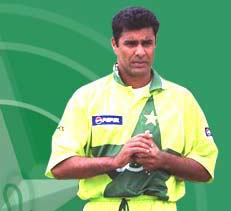
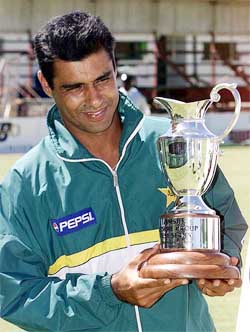
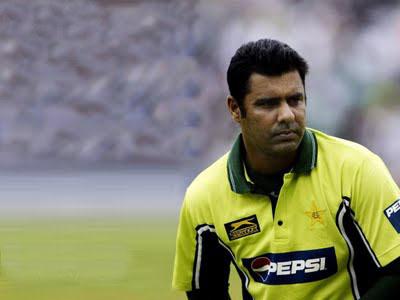
Waqar Younis Maitla is a former Pakistani right arm fast bowler in cricket and widely regarded as one of the best fast bowlers of all time.
He was best known in cricket for his ability to reverse swing a cricket ball at high speed when bowling at the cricket pitch. He took 373 Test wickets and 416 One Day International wickets during his career. He is considered to be the best exponent of the swing bowling delivery. Younis has the best strike rate for any bowler with over 200 Test wickets. He worked as a bowling coach with the national side from 2006 to 2007.
Younis was appointed as the coach of the Pakistan cricket team on 3 March 2010. His managerial contract with the Pakistan Cricket Board will take part in all forms of cricket, right up to December 2011, which will include all professional competitions, such as the 2011 Cricket World Cup.
Early and personal life
Younis was born in Vehari, Punjab in Pakistan in a Jatt family. He was educated in Sadiq Public School in Bahawalpur in Pakistan, the Pakistani College (Pakistan Islamia Higher Secondary School) in Sharjah and the Government College University in Vehari. He was raised in Sharjah in the United Arab Emirates, where his father was a contract worker. He returned to Pakistan during his adolescent years and there, he started playing cricket.
He is married to Dr. Faryal Waqar Younis with a son Azaan Waqar and a daughter Maira Waqar and now lives in Castle Hill in Australia. Younis has also worked as a television sports commentator for the Nine Network in Australia and for Ten Sports in the United Arab Emirates.
Waqar Younis Maitla is a former Pakistani right arm fast bowler born in Vehari Punjab. He is one of the top ten cricketers of all time and got worldwide fame. He is well known in cricket for his ability to “reverse swing a cricket ball” at high speed while bowling at cricket pitch. During his career he took “373 Test Wickets” and “416 One Day International Wickets”. Waqar Younis is considered as one of the best exponents of swing bowling delivery. He has a best strike rate for any bowler with more than “200 Test Wickets”.
Personal Information of Waqar Younis

Personal information
Full name Waqar Younis Maitla
Born 16 November 1971 (age 39)
Vehari, Punjab, Pakistan

Height 1.80 m (5 ft 11 in)
Batting style Right hand bat
Bowling style Right arm fast
Role Bowler
Domestic Team Information
Domestic team information
Years Team
2003-2004 Allied Bank Limited
2003 Warwickshire
2001-2003 National Bank of Pakistan
2000-2001 Lahore Blues
1999-2000 REDCO Pakistan Limited
1998-1999 Rawalpindi
1998-1999 Karachi
1997-1998 Glamorgan
1990-1993 Surrey
1988-1989, 1996-1997 United Bank Limited
1987-1988, 1997-1998 Multan
International Information
International information
National side Pakistan 

Waqar Younus


Waqar Younus


Waqar Younus


Waqar Younus


Waqar Younus


Waqar Younus


Waqar Younus


Waqar Younus


Waqar Younus


Waqar Younus


Waqar Younus        

Waseem Akram

Waseem Akram biography


Wasim Akram (born June 3, 1966 in Lahore, Punjab) is a former Pakistani cricketer. He was a left-arm fast bowler and left-handed batsman, who represented the Pakistani cricket team in TestsOne-Day Internationals. He is widely regarded as one of the finest fast bowlers ever and holds world records for the most wickets taken in both ODIs (502) and List A cricket (881).
An immensely talented player first discovered by Imran Khan, Wasim Akram played for his college(Govt. Islamia College Civil Lines, Lahore) as an opening bowler and batsman. As a bowler, Wasim possessed genuine pace, accurate control of line and length and seam position, and could swing the ball both in and out. With a very deceptive ball-concealing action, he could bowl equally well from both sides of the wicket. His mastery of reverse swing with the old ball meant he was at his most dangerous towards the end of an innings, and earned him the nickname Sultan of Swing.
As well as often being able to find the edge of the bat, Wasim would also focus his attack on the stumps and had a particularly lethal yorker. Of his 414 Test wickets, 193 were taken caught, 119 were taken LBW and 102 were bowled.In partnership with Waqar Younis, he intimidated international batsmen in the 1990s. Together Wasim and Waqar, known as “the two Ws” of the Pakistani team, were one of the most successful bowling partnerships ever.
Wasim was also skilled with the bat and was regarded as a bowling all-rounder. He was especially effective against spinners. However, he liked to slog and was criticised for his lack of big scores and giving away his wicket too cheaply for a player of his talent. He did silence his critics in October 1996 when he scored 257, not out, of the team’s total of 553 against Zimbabwe at Sheikhupura. He also made good scores in difficult times for the Pakistan team such as his 123 against Australia and his 45 not-out to take Pakistan to victory in a low-scoring match. Pakistan, needing six runs in two balls two win the Nehru Cup saw Akram come out to bat. The first ball he faced was hit out of the ground and secured the cup. Ahmed Bilal was his coach who gave him tricks on reverse swing.
Wasim Akram was born in Lahore in a Punjabi family on 3 June 1966. He was educated at Government Islamia College Civil Lines Lahore, where he played as an opening bowler and batsman. Like several other Pakistani cricketers during the 1980s, his inclusion into the national side was at the behest of a senior player in the team, which in Akram's case, was Javed Miandad.
At the age of 30, Akram was diagnosed with diabetes. "I remember what a shock it was because I was a healthy sportsman with no history of diabetes in my family, so I didn't expect it at all. It seemed strange that it happened to me when I was 30, but it was a very stressful time and doctors said that can trigger it." Since then he has actively sought to be involved in various awareness campaigns for diabetes.
Akram married Huma in 1995. They had two sons Tahmoor (born 1996) and Akbar (born 2000) from their marriage of fifteen years. Huma died of multiple organ failure at Apollo Hospital in Chennai, India on 25 October 2009.
On 7 July 2013, it was reported that Akram had become engaged to Melbourne woman Shaniera Thompson, whom he had met while on a visit to Melbourne in 2011. Wasim Akram married his Australian girlfriend, Shaniera Thompson on August 12, 2013, saying he has started a new life on a happy note."I married Shaniera in Lahore last week in a simple ceremony and this is the start of a new life for me, my wife and for my kids".


Waseem Akram


Waseem Akram


Waseem Akram


Waseem Akram


Waseem Akram


Waseem Akram


Waseem Akram


Waseem Akram


Waseem Akram


Waseem Akram


Waseem Akram


Waseem Akram

Shahid Afridi

shahid afridi biography


Sahibzada Mohammad Shahid Khan Afridi, popularly known as Shahid Afridi, is a Pakistani cricketer. Between 1996 and 2012, Afridi played 27 Tests, 334 One Day Internationals, and 46 Twenty20 International for the Pakistani national team.
He made his ODI debut on 2 October 1996 against Kenya and his Test debut on 22 October 1998 against Australia.
He is known for his aggressive batting style, and holds the record for the fastest ODI century which he made in his first international innings, as well as scoring 32 runs in a single over, the second highest scoring over ever in an ODI.
He also holds the distinction of having hit the most number of sixes in the history of ODI cricket.Afridi considers himself a better bowler than batsman, and has taken 48 Test wickets and over 300 in ODIs.
Currently Afridi is the leading wicket taker in the Twenty20 format taking 53 wickets from 43 matches.Shahid Afridi has signed to play for the Sydney Thunderin Australia’s Twenty20 Big Bash league.
In June 2009, Afridi took over the Twenty20 captaincy from Younus Khan, and was later appointed ODI captain for the 2010 Asia Cup. In his first match as ODI captain against Sri Lanka he scored a century however Pakistan still lost by 16 runs.
He then also took over the Test captaincy but resigned after one match in charge citing lack of form and ability to play Test cricket; at the same time he announced his retirement from Tests. He retained the captaincy in limited-overs form of the game and led the team in the 2011 World Cup. In May 2011, having led Pakistan in 34 ODIs Afridi was replaced as captain.
Later that month he announced his conditional retirement from international cricket in protest against his treatment by the Pakistan Cricket Board (PCB); in October he reversed his decision. UNICEF and Pakistani authorities have taken Shahid Afridi on board for its anti-polio campaign in the tribal belt of lawless Waziristan region.
Of Shahid Afridi it can safely be said that cricket never has and never will see another like him. To say he is an allrounder is to say Albert Einstein was a scientist; it tells a criminally bare story.
For a start, the slant of his all-round skills only became clear ten years into his career; he is a leg-spinning allrounder. Variety is his calling and as well as a traditional leg-break, he has two googlies, a conventional offie and a lethal faster one, though this is increasingly rare. All come with the threat of considerable, late drift. He fairly hustles through overs, which in limited-over formats is a weapon in itself and the package is dangerous.
In 2009 Afridi became one of the World’s most expensive cricketers in the IPL auction.
Sahibzada Mohammad Shahid Khan Afridi is a cricket player for the Pakistan National team. He exploded on to the cricket scene by scoring the fastest century in ODIs in his very first innings. He was initially selected as a bowler but after his big hitting in his 1st innings, he focused more on his batting. In recent years he has gone back to focusing on his bowling . His style of play is best suited to the shortest form of the game T20s.
Shahid Afridi


Shahid Afridi


Shahid Afridi


Shahid Afridi


Shahid Afridi


Shahid Afridi


Shahid Afridi


Shahid Afridi


Shahid Afridi


Shahid Afridi


Shahid Afridi